How do I make sense of it?
How do I make sense of the data?
Every World Café session generates an excited buzz of conversation. The room comes alive with words as students share ideas, tell stories and build understanding together and those words contain so much wisdom.
But how do we capture those words so that the wisdom isn’t lost? And how do we find the real gems of insight among all the chatter?
These questions matter. The World Café has the potential to lead to meaningful changes and to transform aspects of legal education but only if the insights generated during the session do not disappear when the conversation ends.
CAPTURING THE CONVERSATION
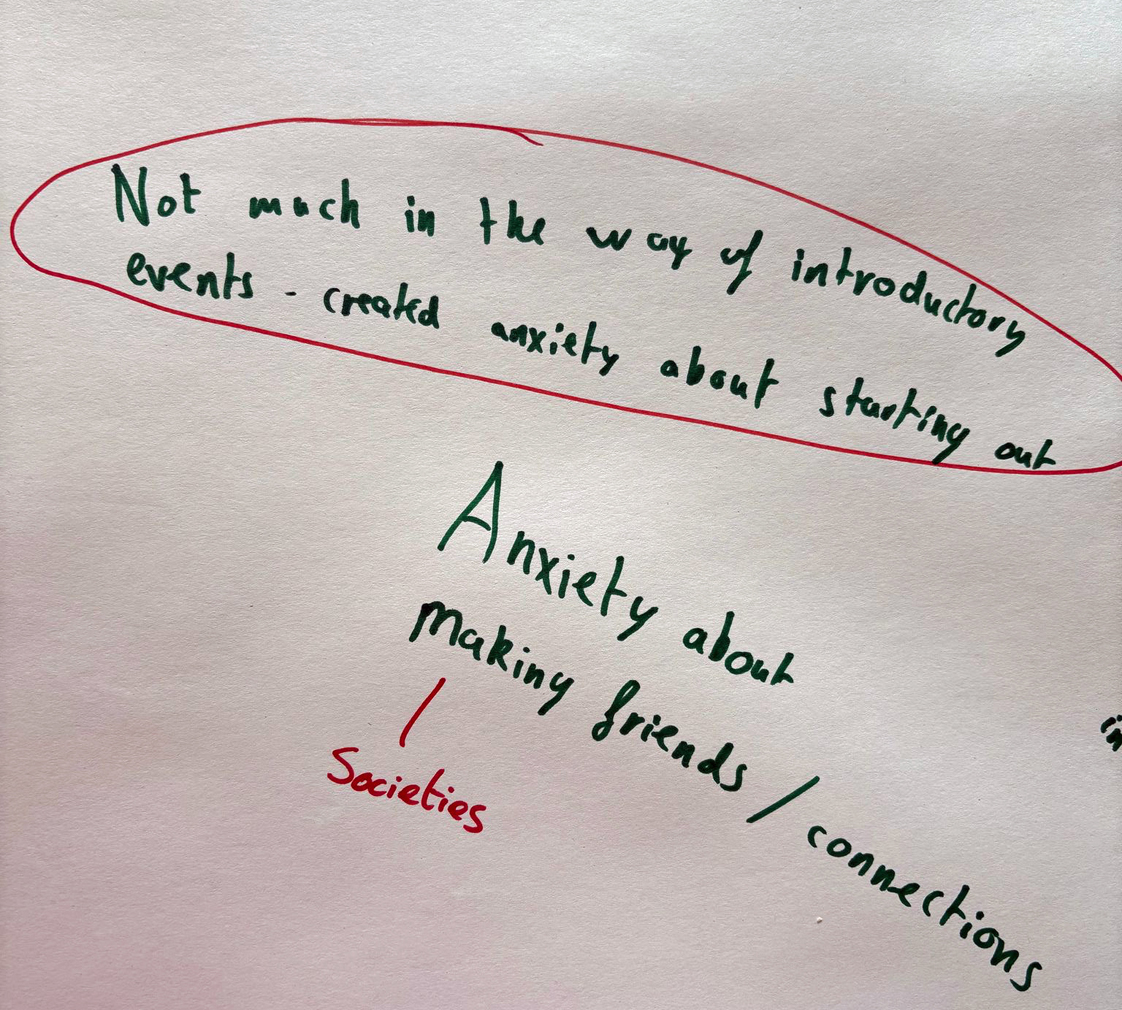
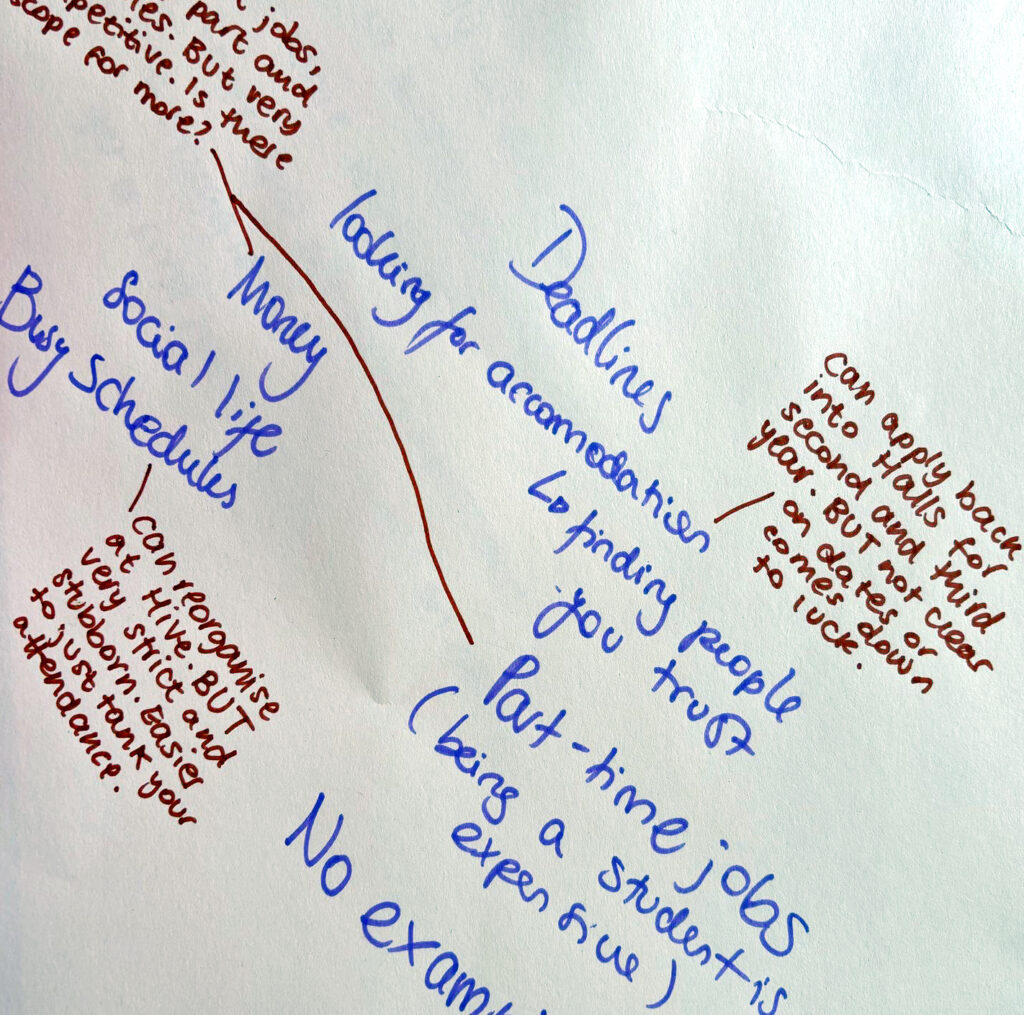
Write on the tablecloths!
By and large, students make excellent World Café participants. They are used to working in small groups and, fortunately – at my home institution at least – they are very used to following my instructions. They listen attentively when I explain the task, join in with enthusiasm and are quick to understand how to move between tables.
But there is one instruction that always seemed to get forgotten once the excitement of sharing ideas had taken hold: write it on the tablecloths!
It can be agonising to hear students sharing really important ideas while watching those ideas go unrecorded. Really rich conversations were taking place but only a fraction of it was being captured on the tablecloths. I didn’t really want to disrupt the informal atmosphere by putting recording devices on every table and, in any case, when I tried it as an experiment, the conversation at the table tended to be overpowered by the background noise coming from the other tables.
Having a notetaker at each table seemed like a reasonable solution but that did not work particularly well either. I noticed that some notetakers, in their eagerness to capture all the important points, would interrupt conversations to ask students to repeat themselves which was far more intrusive than using a recording device would have been. Other notetakers seemed more immersed in listening to the conversation than making notes of what was said which led to inconsistent quality of notes between tables.
A better solution seemed to be to make the table host responsible for ensuring that insights and suggestions were captured on the tablecloths. This didn’t mean that the table host had to write everything down themselves, although many did, but that they needed to make sure that somebody was always writing when ideas were being shared. This worked well and I also added little reminders on the tables asking students not to let their contributions go unrecorded.
In one session, I noticed that a particular table host was holding students back from leaving his table, insisting that they should not go until they’d checked to make sure he’d written down everything that they had said that was important. This was quite disruptive to the movement between tables but the idea itself was a really good one and so I incorporated it into future sessions by adding a short period of “capture time” after each question and before students moved to their next table. This gave students the opportunity to pause, look back on their conversation and ensure that the most important ideas made it onto the tablecloth. Of everything I tried, this simple approach was the most effective.
THE HARVEST
Bring the room together
Capturing the whole-group harvest at the end of the World Café is much easier. This is when the ideas and suggestions generated around the tables are brought together and the group begins to identify possible actions and changes. What matters here is what is said, rather than who says it, so it is straightforward to record the discussion as a whole. I then transcribe it and analyse it alongside the ideas written on the tablecloths.
IMMEDIATE REFLECTION
While it's still fresh
I always set aside some time immediately after each session to reflect on what happened while it is still fresh in my mind. This is not primarily about gathering more data. It is an opportunity to think about what I learned from the session and what I might want to do differently next time. I make a note of anything that surprised me or particularly struck me, as well as the mood in the room, the energy around particular topics and the connections students appeared to make between them.
These reflections are not a substitute for the students’ words, but they help to preserve aspects of the session that may not be visible in a transcript. They also give me something useful to revisit later. Did the ideas that felt important in the room still seem important when I examined the data more systematically and with a little distance? Did I notice things in the transcript that I had missed in the moment? Comparing my immediate reflections with my later analysis helps me to think more carefully about both the students’ contributions and my own interpretation of them.
FINDING THE THEMES
I think of it as warm data
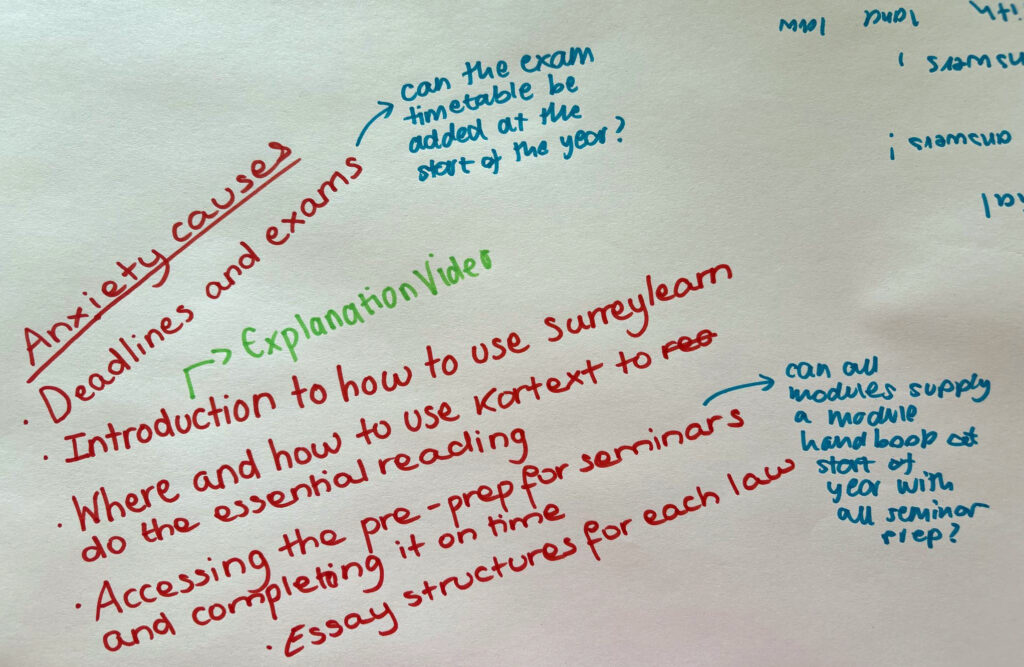
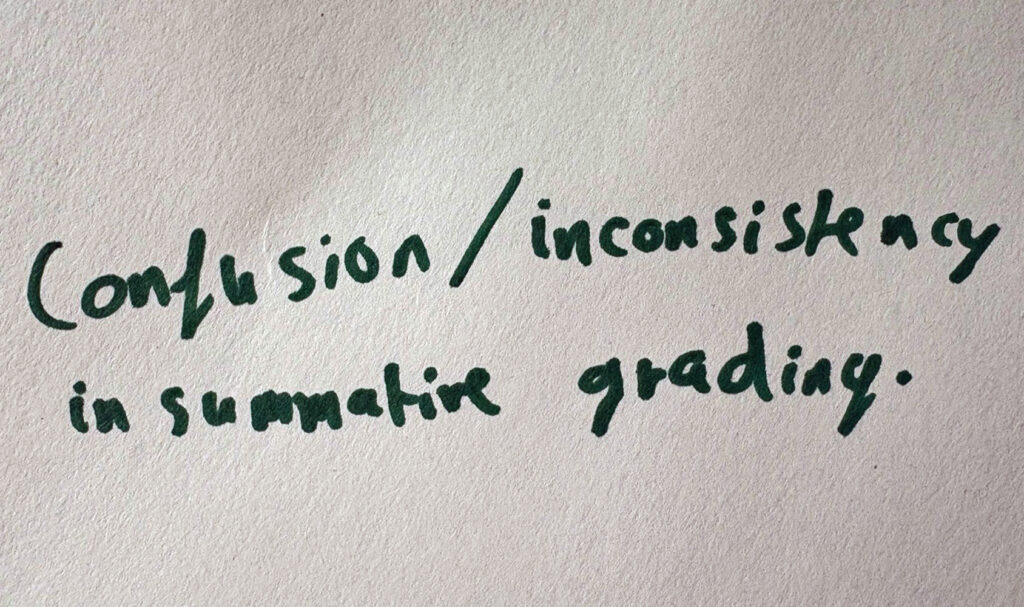
The close, hands-on engagement of working through printed transcripts helps me to remain connected to the students behind the words. As I read, I can often picture the conversation and hear the students’ voices again. This helps me to stay close not only to what was said, but also to why it seemed important and how ideas developed and connected across the room.
Working by hand does not make the analysis any less systematic. I record the themes and subthemes I identify, keep track of the decisions I make and analyse the material. NVivo is a useful tool for managing data but interpreting that data remains a very human process. For me, working by hand creates the closeness to the material and, importantly, to the people who created it, that this process requires.
CHECKING THE ANALYSIS
At least twice
I always analyse the material at least twice: once soon after the World Café and again after some time has passed. I compare the two analyses to see whether I am still noticing the same patterns. If there are significant differences, I return to the material and reflect on why I may have seen it differently each time. Where possible, I also invite someone else to look at it and offer another perspective. I then return to the notes I made immediately after the session and consider how my first impressions compare with the themes that emerged from a slower, more systematic reading of the transcripts.
MAKING CONNECTIONS
Joining it all up
STUDENT VOICE
Their words, not mine